 By Walter Akillah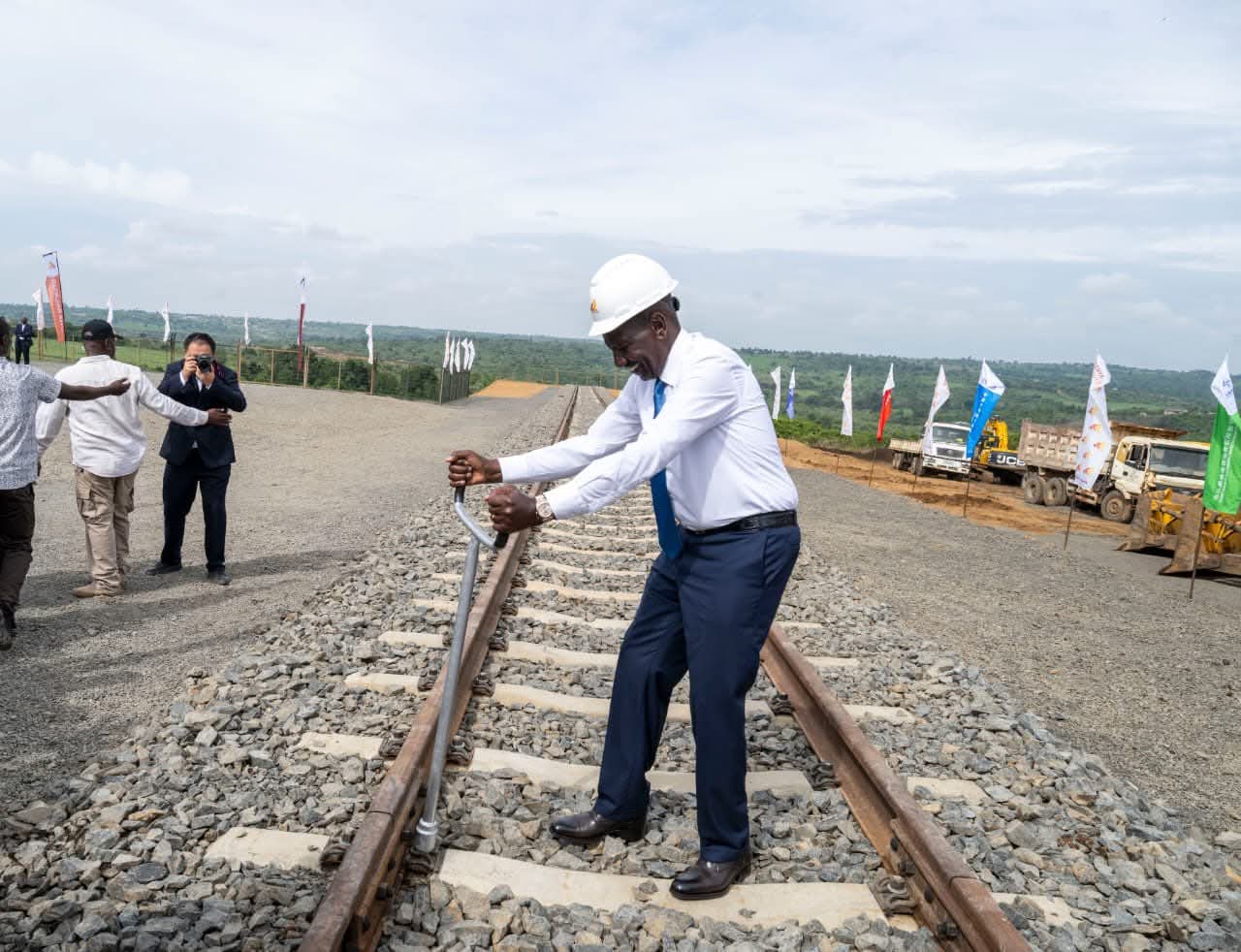
President William Ruto has officially launched the construction of the Naivasha–Kisumu–Malaba Standard Gauge Railway (SGR), marking a major milestone in Kenya’s infrastructure and economic transformation agenda. The groundbreaking ceremony, held in Suswa, Narok County, on Thursday, signaled the start of the long-awaited extension of the SGR from Naivasha to western Kenya and the border town of Malaba.
The project will be implemented by China Communications Construction Company (CCCC), one of the world’s leading infrastructure firms. CCCC Chairman Song Hailiang met President Ruto at State House, Nairobi, on Wednesday ahead of the launch. The meeting reaffirmed the deepening infrastructure partnership between Kenya and China as both nations work to complete the final phases of the ambitious railway network.
In his address, President Ruto described the SGR extension as a transformative project that will redefine Kenya’s economic landscape and strengthen its position as a regional trade hub.
“Today marks yet another consequential moment in the economic transformation of our Republic,” he said. “We gather here not only to break ground for the construction of a railway, but also to complete a national vision; a vision to connect Kenya more efficiently, to lower the cost of doing business, and to firmly position our country at the centre of trade in the Great Lakes region and across the African continent.”
He emphasized that the project goes beyond infrastructure development, calling it a key driver of East African integration. “This project is not merely about laying tracks; it is about stitching together the fabric of East African commerce. Once complete, it will position Kenya as the gateway to the region.”
Project Details
The Naivasha–Kisumu–Malaba SGR extension will be developed in two phases.
- Phase One: The 264-kilometre Naivasha–Kisumu section will run from Emurtoto in Narok County to Kisumu, with an additional 8.69-kilometre branch line to the proposed new Kisumu Port. It will traverse Narok, Bomet, Kericho, Nyamira and Kisumu counties.
- Phase Two: The 107-kilometre Kisumu–Malaba section will pass through Kisumu, Siaya, Vihiga, Kakamega and Busia counties before terminating at the border town of Malaba.
Once complete, the railway will form a critical part of the Northern Corridor, linking Kenya to Uganda, Rwanda, Burundi, South Sudan and the Democratic Republic of Congo.
President Ruto said the SGR extension will facilitate seamless movement of goods from the Indian Ocean to the hinterland, significantly reducing the time and cost of cross-border trade. The railway will also ease pressure on the road network by shifting bulk cargo from road to rail, lowering transport costs, saving time and improving safety on major highways.
“The SGR extension will position Kenya as the regional trade and logistics hub, linking Uganda, Rwanda, Burundi, South Sudan and the Democratic Republic of Congo to the Port of Mombasa while unlocking the economic potential of western Kenya,” he said.
Currently, thousands of trucks use the Nairobi–Kisumu highway daily, contributing to heavy wear and tear, frequent accidents and high transportation costs. The new railway is expected to alleviate these challenges by offering a faster, safer and more efficient alternative for freight and passenger transport.
The SGR extension is designed to carry up to 22 million tonnes of freight annually. Each freight train will have a haulage capacity of 4,000 tonnes, while passenger trains will carry up to 1,096 people at speeds of up to 120 kilometres per hour.
The Naivasha–Kisumu section will feature six intermediate stations in Narok, Mulot, Bomet, Sotik, Sondu and Ahero, along with several crossing stations and a major freight station in Kisumu linked to the port. The Kisumu–Malaba section will include intermediate stations in Yala and Mumias, and a major freight station in Malaba.
The project will also include 13 tunnels, 23 bridges and 376 culverts, designed with environmental sustainability in mind.
According to the government, the Naivasha–Kisumu–Malaba SGR will reduce freight transport costs, enhance trade competitiveness, improve mobility and stimulate economic growth along the corridor.
It is expected to open up new investment opportunities in agriculture, manufacturing, logistics and tourism across western Kenya and the Great Lakes region.
 Nyanza Wire