 By Nyanza Wire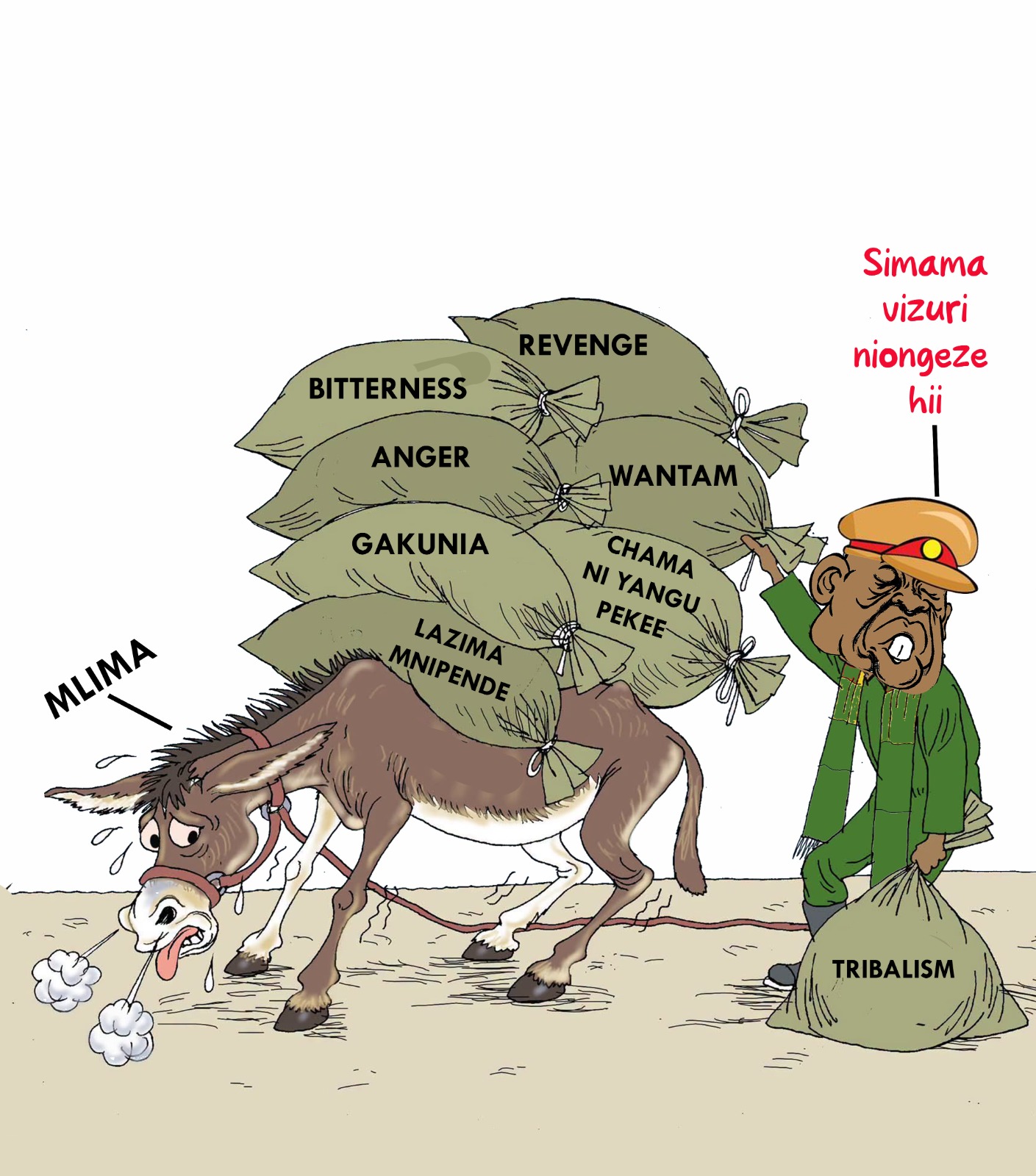
Leadership is measured not only by the ability to command a crowd but, more critically, by the capacity to build consensus among equals. It is on this score that former Deputy President Rigathi Gachagua is increasingly being tested and found wanting. Barely two years after leaving the second most powerful office in the land, Gachagua finds himself locked in public disagreements with several of the very principals he needs to present a credible alternative to President William Ruto. The pattern is now clear and documented.
Martha Karua has rejected the notion that Gachagua is the Mt Kenya kingpin. “He is not my leader,” she has said. “He is a party leader like me.” She has opposed zoning arrangements that would favour one party and insisted that no candidate can be chosen in a boardroom. Parties must compete; the people must decide.
Justin Muturi and Peter Munya, together with Lenny Kivuti, have publicly refused Gachagua’s push for other parties to dissolve and join his Democracy for Citizens Party. They told him he has no authority to declare himself the region’s sole spokesperson. Munya has gone further. In a recent interview he called Gachagua a bully, citing his language against Murang’a Governor Irungu Kang’ata and the subsequent attack on the governor. “I’m hoping Gachagua is not a presidential candidate because I would not support that kind of a person to run the country,” Munya said. “Those dictatorial tendencies are the same ones we are saying we don’t want in the current government.”
Allies of Fred Matiang’i have similarly warned against bullying and belittling fellow leaders, accusing Gachagua of becoming the biggest obstacle to opposition unity. Matiang’i himself has stressed that unity requires mutual respect, honesty and good faith among principals.
The irony is sharp. If Gachagua struggled to maintain political cohesion while serving as Deputy President with the full weight of State authority behind him the challenge of uniting ambitious equals as a private citizen was always going to be steeper. Coalitions survive on consultation, compromise and equal treatment. They cannot revolve around one personality, one regional base, or the insistence that national conversations must centre on one private residence.
Gachagua’s approach energises his most loyal base. It also alienates seasoned politicians who built national careers long before he rose to the top. Successful opposition movements are rarely sustained by personality cults. They succeed when leaders subordinate personal control to a shared national agenda.
Whether Gachagua acknowledges it or not, his greatest immediate challenge is no longer President Ruto. It is convincing his own co-principals that he can work with them rather than over them. Until he demonstrates that capacity, the question will persist: if he could not sustain unity while occupying the country’s second-highest office, what evidence is there that he can do so now without the authority of government behind him?